Leaderboard




Popular Content
Showing content with the highest reputation since 10/03/2026 in all areas
-
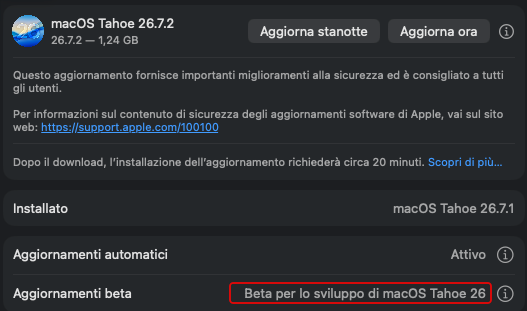
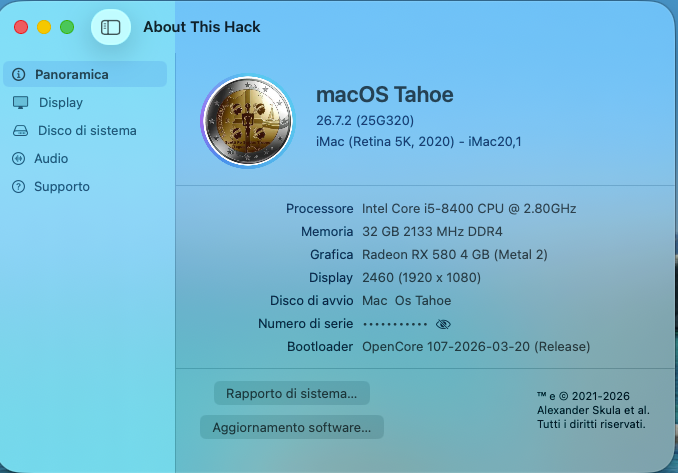
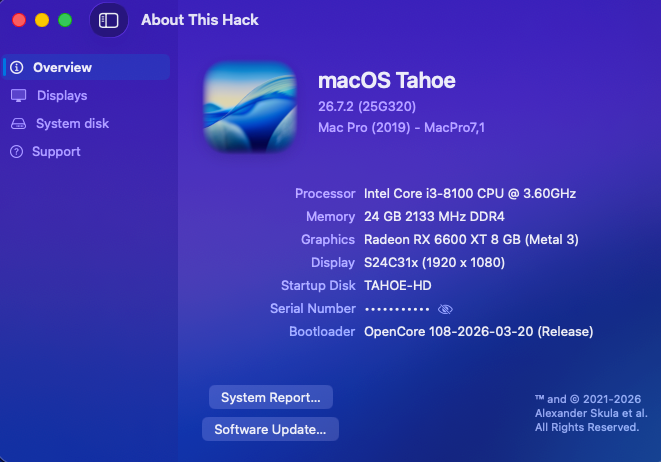
macOS Tahoe 26.7.2 ( 25G320 ) Full Installer https://swcdn.apple.com/content/downloads/56/55/142-36157-A_UQAE2ZYSL6/czqg6vwamgyvjnd3coz6t7fa4lb1mb8x1n/InstallAssistant.pkg
 3 points
 -
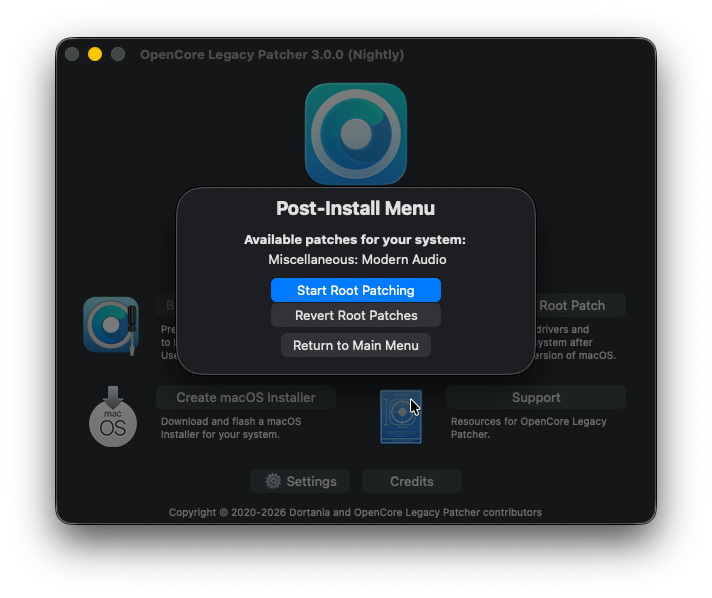
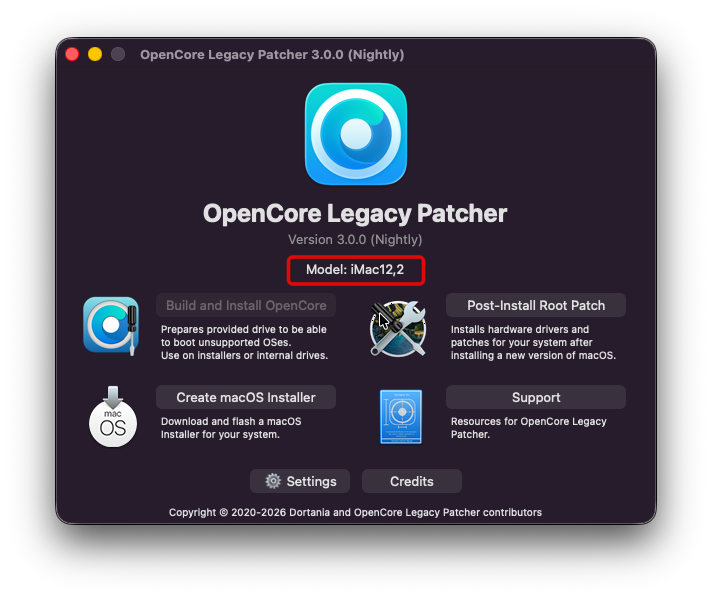
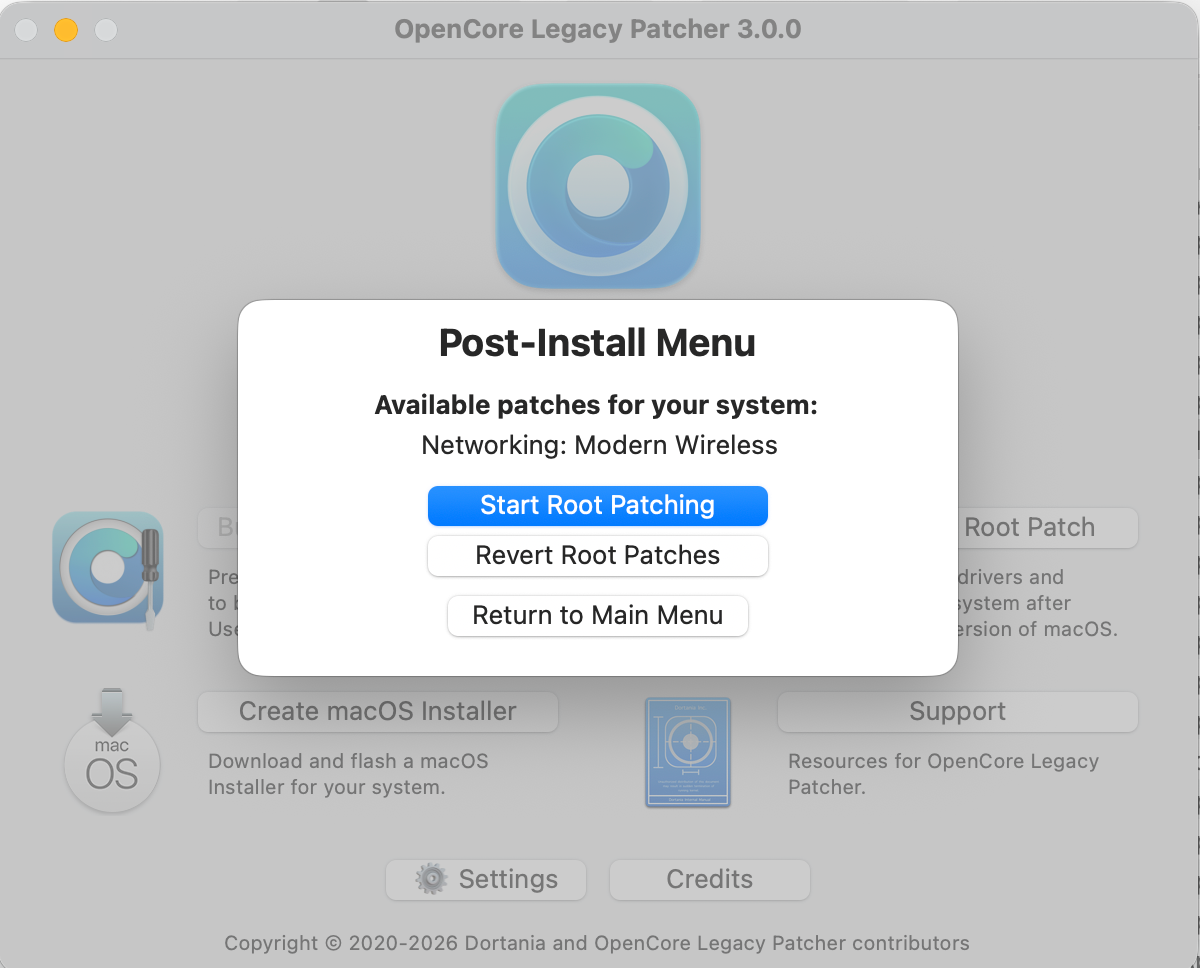
OCLP 3.0.0 RC2 ( Ufficiale ! ) Per le Fenvi / Broadcom https://github.com/dortania/OpenCore-Legacy-Patcher/releases/tag/3.0.0-rc.2 " Update HDA patch and enable Tahoe patching without developer engagement " 🎉 🎉 🎉3 points
-
Eccomi appena aggiornato. Tutto ok.
2 points
-
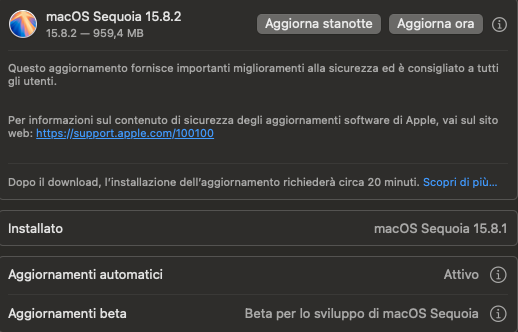
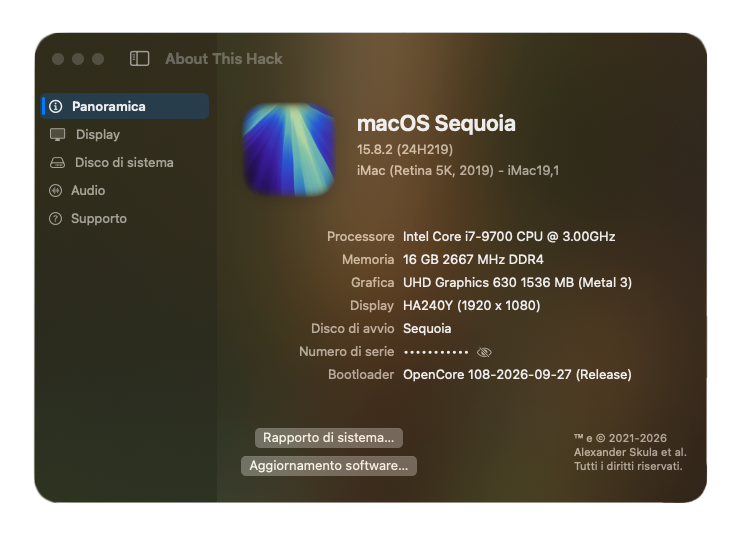
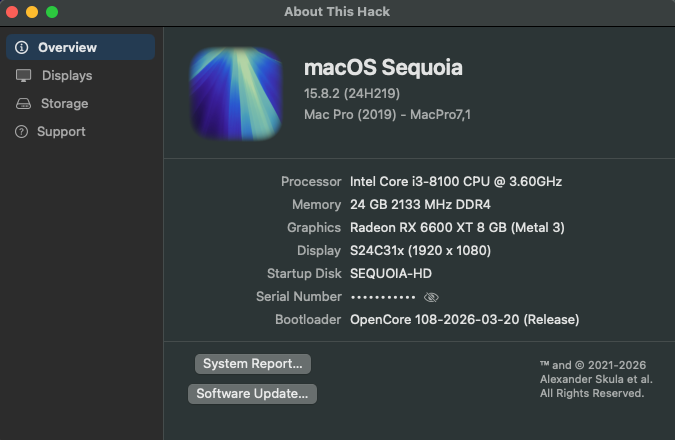
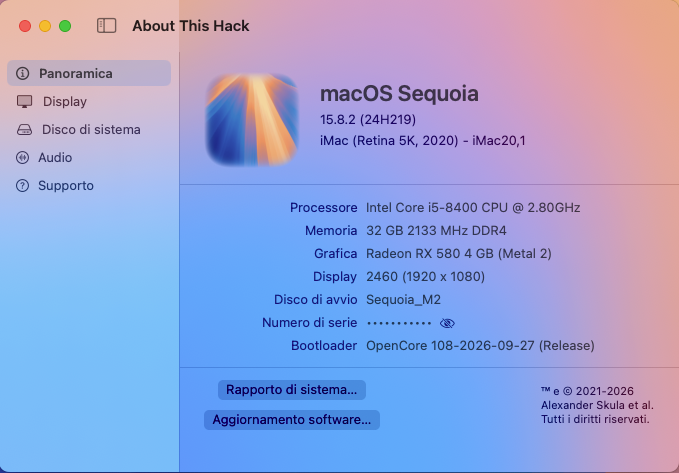
macOS Sequoia 15.8.2 ( 24H219 )
2 points
-
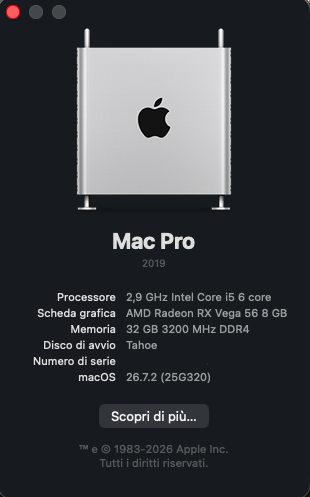
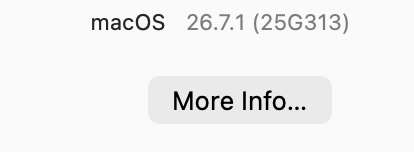
macOS 26.7.2 - 25G320 - 👍
2 points
-
tutto ok anche poi utilizzando il nuovo OpenCore legacy Patcher R3.0 RC2
2 points
-
2 points
-
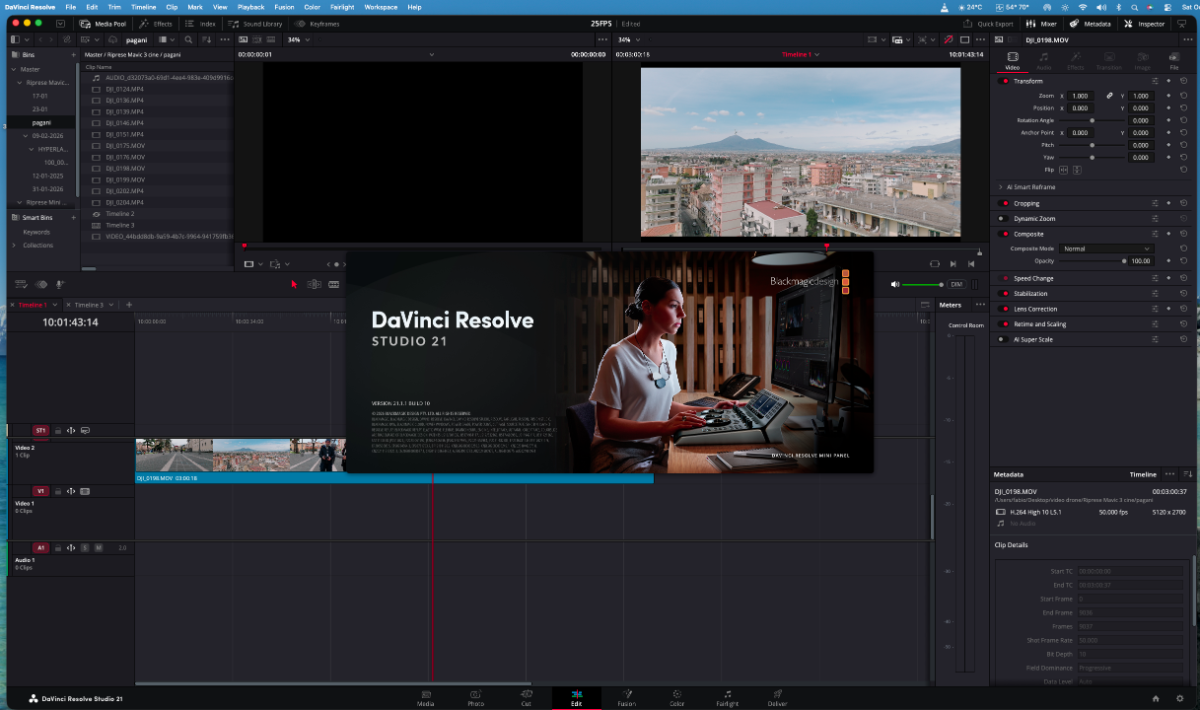
Alive and Kicking (DVR 21.1 on macOS Tahoe 26.7.1
2 points
-
😘VT-D abilitato
1 point
-
macOS Sequoia 15.8.2 -24H219 - 👍
1 point
-
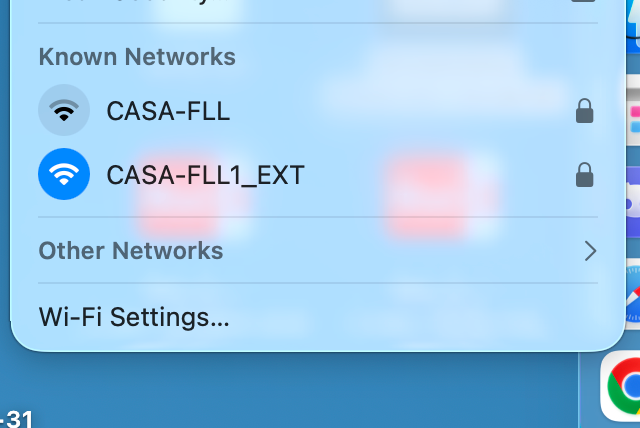
Grazie Anto65, scaricato, installato nel kernel ed eliminato itlwm vecchio insieme ad Helipot; il wifi funziona perfettamente!1 point
-
https://dortania.github.io/Getting-Started-With-ACPI/Universal/dmar.html1 point
-
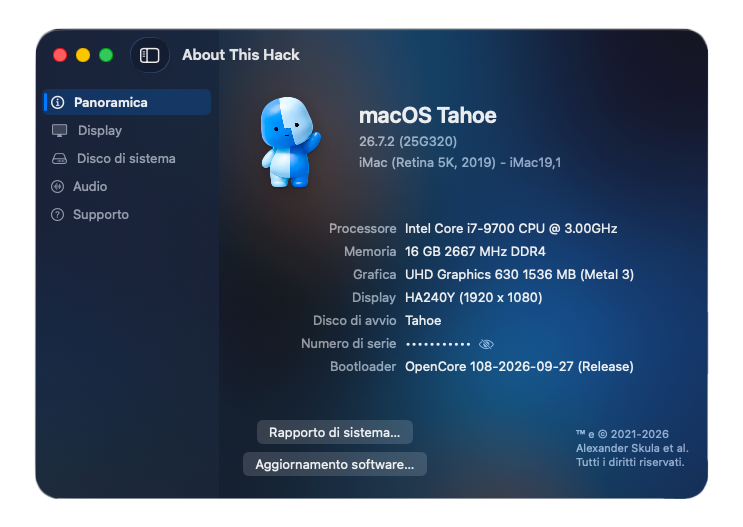
si https://github.com/2009-Nissan-Cube/About-This-Hack ce ne sono diverse versioni io uso questa1 point
-
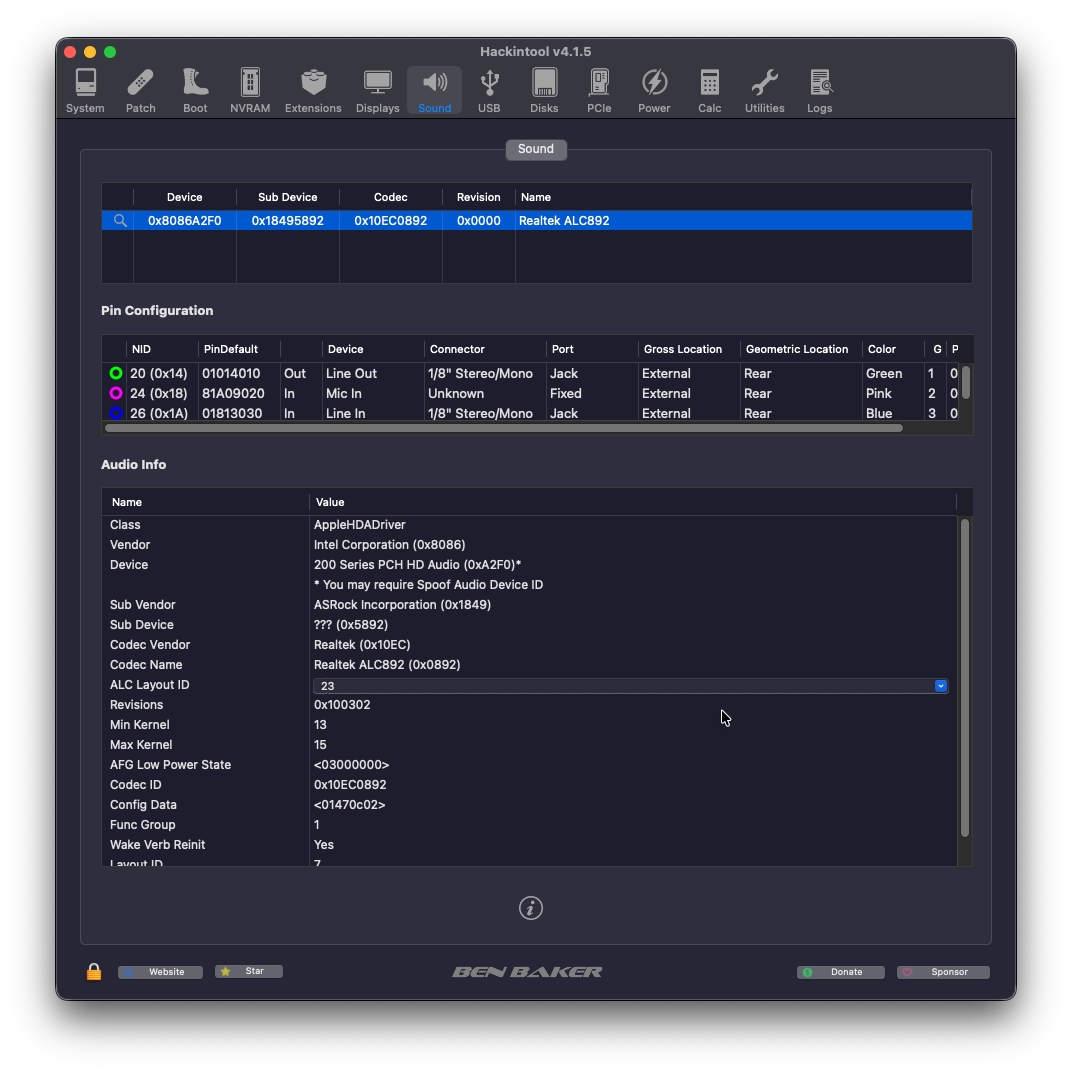
Ragazzi come fate a ottenere questa schermata? e un programma?1 point
-
OCLP 3.0.0-rc.31 point
-
anche con VTD disable nel BIOS e DisableIoMapper true
1 point
-
Aggiunto il supporto AppleVTD ( sembra andare di moda ultimamente 🤭 ) ai Kexts Airport Tahoe / Sequoia ( VTD abilitato nel BIOS DisableIoMapper = False ) https://github.com/laobamac/itlwm/actions/runs/376018343721 point
-
1 point
-
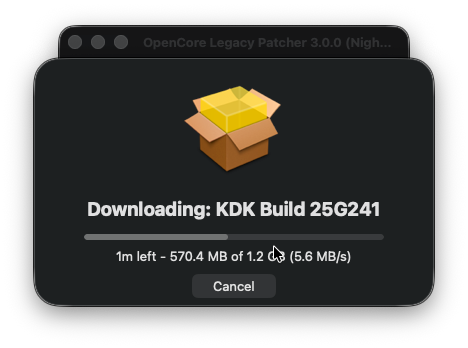
@FrankyM76 Se ti riferisci alla ver. dell app si aggiorna da solo , non ci sono nuove versioni l ultima 3.1.9 Stessa cosa per il KDK si scarica da solo quello corrispondente alla versione installata / da istallare di Tahoe ... avresti ricevuto un avviso o ancora peggio nn avviato , se l aggiornamento non fosse andato a buon fine1 point
-
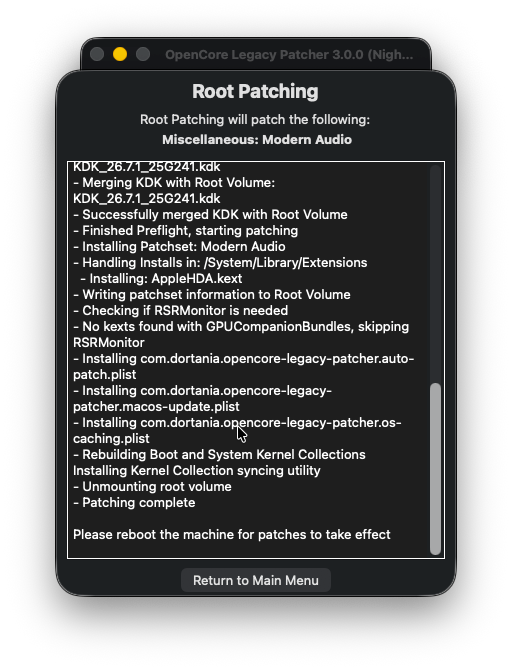
grazie ad @Anto65che mi ha stimolato ho provato funziona Ricordarsi di fare il revert delle patches con la versione cinese (se si usa quella) riavviare Disinstallare la versione cinese con il proprio uninstaller (scaricabile dal github di loabmac) Scaricare la 3.0 RC2 ufficiale installarla fare le patch che propone (a me solo il wifi perchè ho audio supportato di serie) riavviate e dovreste vedere il wifi funzionante piu' che per Hackintosh e' una buona notizia chi possiede vecchi Mac originali
1 point
-
Ciao E' in Cinese, se serve lo aggiorna lui (mi pare) io non lo aggiorno da un po'1 point
-
Ti ringrazio per il consiglio1 point
-
1 point
-
No non la fai se non ti da noia la spesa sarebbe abbastanza più performante del tuo miglior sistema attuale1 point
-
Hi guys. I haven't bee active here much but just wanted to share that for those that have been using Bootabler there is a new version available for download with macOS Downloader function built in to the Bootabler with multiple ISO or USB disk creation functions. I hope you enjoy the new version. Ciao a tutti. Non sono stato molto attivo qui ultimamente, ma volevo solo condividere con voi la notizia che, per chi usa Bootabler, è disponibile una nuova versione scaricabile con la funzione macOS Downloader integrata e diverse opzioni per la creazione di dischi ISO o USB. Spero che la nuova versione vi piaccia.1 point
-
dopo provo😀0 points
-
E tu che non ci volevi venire 🤣 Sinceramente ero un po' incredulo anch io ieri quando l ho postato , ma poi vedendo sul Web che le conferme fioccavano mi sono ricreduto Mi sarei sacrificato volentieri x la " scienzia " 🤣 ma non ho nessuna scheda W-Fi , grazie x averlo provato Attualmente si solo le patch per Wi-Fi ma nn e' detto che nella versione finale non includono le Patch per AppleHda o le patch per schede grafiche non metal Ricordo comunque per chi avesse bisogno l audio Built-In ci sono soluzioni alternative VoodooHda , il quale ormai basta metterlo come un normale Kext in EFI e non piu' in /Library/Extensions/ supporta anche l audio Hdmi HDAUniversal , kext di un famoso " birraio " 😆 altrettando valido , supporta anche l audio Hdmi , va ancora installato in /Library/Extensions/0 points